
Section 1. Designation of Arbitrator
The Parties agree to the following procedures to designate arbitrators to be used for all disputes properly referred by either Party for disposition under the provisions of this article. Within five work days from the date of the request for binding arbitration, the party invoking arbitration shall request the Federal Mediation and Conciliation Service to provide a list of thirteen impartial persons qualified to act as arbitrators. The party invoking arbitration shall pay for the request for the list of arbitrators. The Library and the Association shall meet within five work days after the receipt of such list. First the Library and then the Association shall strike one arbitrator from the list of thirteen and repeat this procedure until one name remains. This remaining person shall be the duly selected arbitrator.
Section 2. Binding Arbitration Procedure
- Each Party shall make a separate submission and the arbitrator shall determine the issue or issues to be adjudicated based on those separate submissions unless the Parties agree on a joint submission of the issue(s) for arbitration.
- The arbitrator shall specify the procedures to be followed during the arbitration proceeding.
- Either the Library or the Association may have prepared at its own expense a verbatim transcript of the hearing.
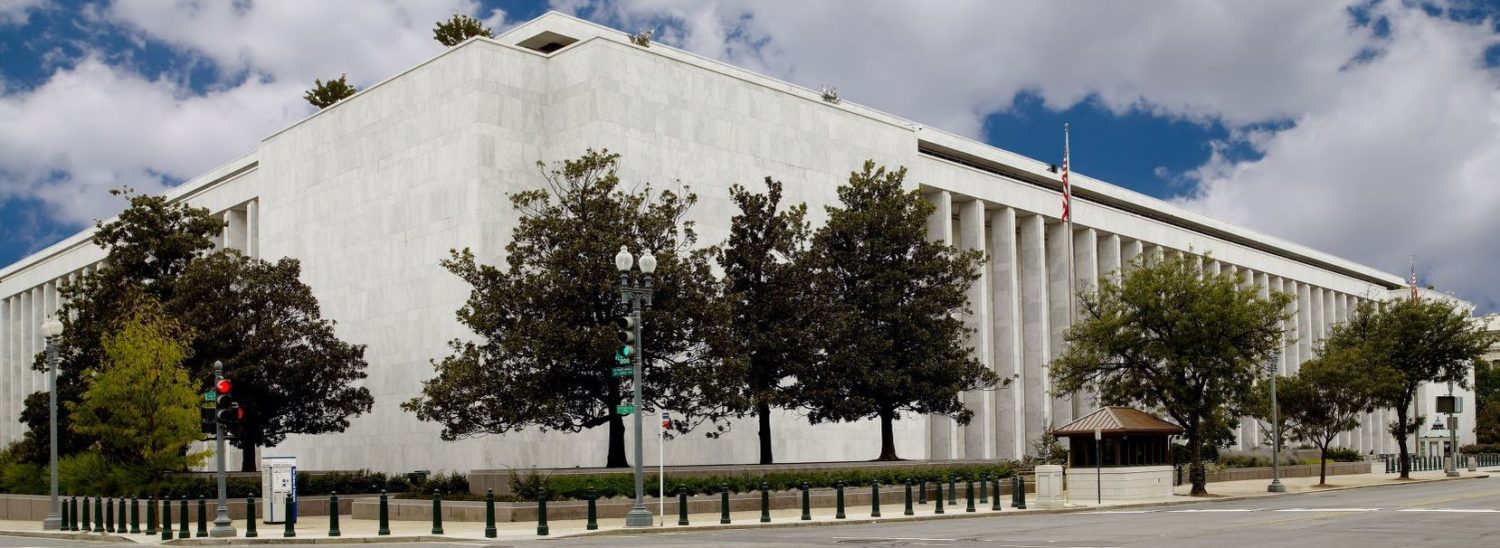
- The arbitration hearing will be held on Library premises during normal hours of regular service between 8:00 a.m. and 6:00 p.m. on work days. Two Association representatives and all necessary witnesses on behalf of the Association in the hearing shall be on official time without charge to annual leave for any time required to participate in the hearing. The term “premises” means the Thomas Jefferson Building, John Adams Building, and the James Madison Memorial Building in Washington, D.C., unless the Parties mutually agree to hold the hearing elsewhere. Each party shall bear its own travel costs. The expenses and compensation of any outside witnesses called before the arbitrator shall be borne by the Party calling such witnesses.
- The arbitrator shall make timeliness determinations prior to addressing the merits of the grievance(s) before him/her. Whenever possible, the arbitrator shall also make arbitrability determinations prior to addressing the merits of the grievance(s) before him/her. Should the arbitrator find that a grievance is untimely or not arbitrable, the merits of the grievance need not be reached. Should the grievance be disposed of on the timeliness or arbitrability issue, the cost shall be borne by the losing Party. Should the grievance be disposed of on the merits, the arbitrator’s fee and expenses shall be borne by the party that loses on the merits. If neither partys position is fully sustained on the merits, the Parties will split the cost proportionately as determined by the arbitrator.
Section 3. Arbitrators Award
- The arbitrator will render a written decision as quickly as possible, but not later than thirty (30) days after the submission of the final documents by the Parties unless the Library and the Association mutually agree to extend the time limit.
- In the event that there is a dispute over a policy of an appropriate authority to which the Library is subject, the Library and the Association may jointly or separately request an interpretation in advance from such authority. The interpretation shall be received and given consideration by the arbitrator in rendering the decision.
- The arbitrators award shall be final and binding on the Parties. However, either the Library or the Association may file exceptions to an award in accordance with 5 U.S.C. 7122.
- A dispute as to the application of an arbitrator’s award shall be returned to the arbitrator with a request for an interpretation.
Section 4.
The arbitrator shall have no authority to change, modify, alter, subtract from, add to, or disregard the provisions of this Agreement. In making awards, the designated arbitrator shall be bound to apply, as necessary, the provisions of law and standards for review provided in the Statute, other applicable provisions of 5 USC, and this Agreement, including applicable decisions of administrative authorities to which the parties are subject by law, such as the Federal Labor Relations Authority (FLRA) and the Comptroller General of the United States.